


How to Read Market News Sentiment

What makes headlines better to read? Sentiment scores.
What if you could see the tone of headlines before reading them?
Well, now you can.
Tools exist now to gauge sentiment in text.
We use these sentiment indicators and score them.
Bull markets are born on pessimism, grow on skepticism, mature on optimism, and die on euphoria. - John Templeton
On October 19, 1987, when news of the stock market turmoil broke, Paul Tudor Jones solidified his reputation as a legendary trader. By predicting and betting on a market crash, Jones's Tudor Investment Corporation achieved an astounding 125.9% return after fees, earning him an estimated $100 million. This day, known as "Black Monday," saw the Dow Jones Industrial Average (DJIA) plunge 22.6% in a single trading session, marking the most significant one-day stock market decline in history.
But what caused this unprecedented drop, and how did news events play a role?
In an article on Federal Reserve History .org by Donald Bernhardt and Marshall Eckblad, Federal Reserve Bank of Chicago they write:
“In mid-October, a storm cloud of news reports undermined investor confidence and led to additional volatility in markets. The federal government disclosed a larger-than-expected trade deficit and the dollar fell in value. The markets began to unravel, foreshadowing the record losses that would develop a week later.”
A similar scenario unfolded in early 2020, leading to the infamous stock market crash of March that year. In response to the rapidly escalating COVID-19 pandemic, global markets experienced unprecedented volatility. During this period, the U.S. stock market saw its circuit breakers triggered four times within a span of just two weeks—on March 9, 12, 16, and 18—each time after the market dropped by more than 7%. These halts were implemented to prevent panic selling and allow investors to absorb the news, but they underscored the severity of the situation. The pandemic-driven uncertainty, combined with alarming news reports and economic fears, drove the market into one of the fastest and most severe downturns in history.
I wish I had sold on the rumor when the news first broke, but how could I have known it would be any different from the countless disease outbreaks that had come before?
What can we do as traders?
The unpredictable nature of financial markets, especially during times of crisis, underscores the importance of staying informed and having a strategy in place. While it’s impossible to foresee every market-moving event, traders can take several steps to protect themselves from the impact of news-driven volatility.
Staying Informed
To stay ahead, traders should prioritize staying informed about global events and economic indicators that could influence the markets. This includes monitoring:
Economic Calendars
Use the WealthBranch Economic Calendars to track scheduled releases like employment data, inflation reports, and central bank announcements. This can help you anticipate market reactions and plan your trades accordingly.
The VIX or Volatility Index
The VIX, or Volatility Index, reflects market expectations of future volatility based on S&P 500 options prices. When significant news occurs—such as economic reports or geopolitical events—investors adjust their trading strategies, often leading to increased demand for options. If the news suggests higher uncertainty, the prices of options, especially puts, rise, which in turn increases the VIX. Conversely, positive news can lower volatility expectations, reducing the VIX. Thus, the VIX serves as a gauge of market sentiment and reacts dynamically to news and events impacting investor behavior.
WealthBranch News Page
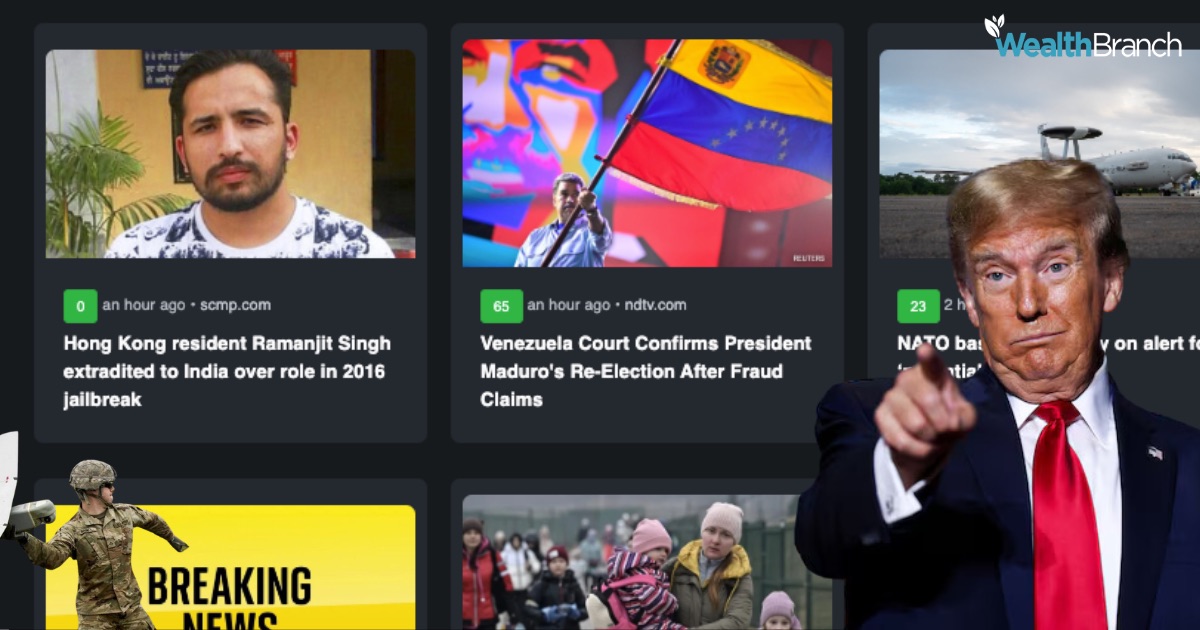
Looking for sentiment rated news? Visit our news page for unfiltered updates on current events and look red and green sentiment scores on headlines.
News Sentiment Scores
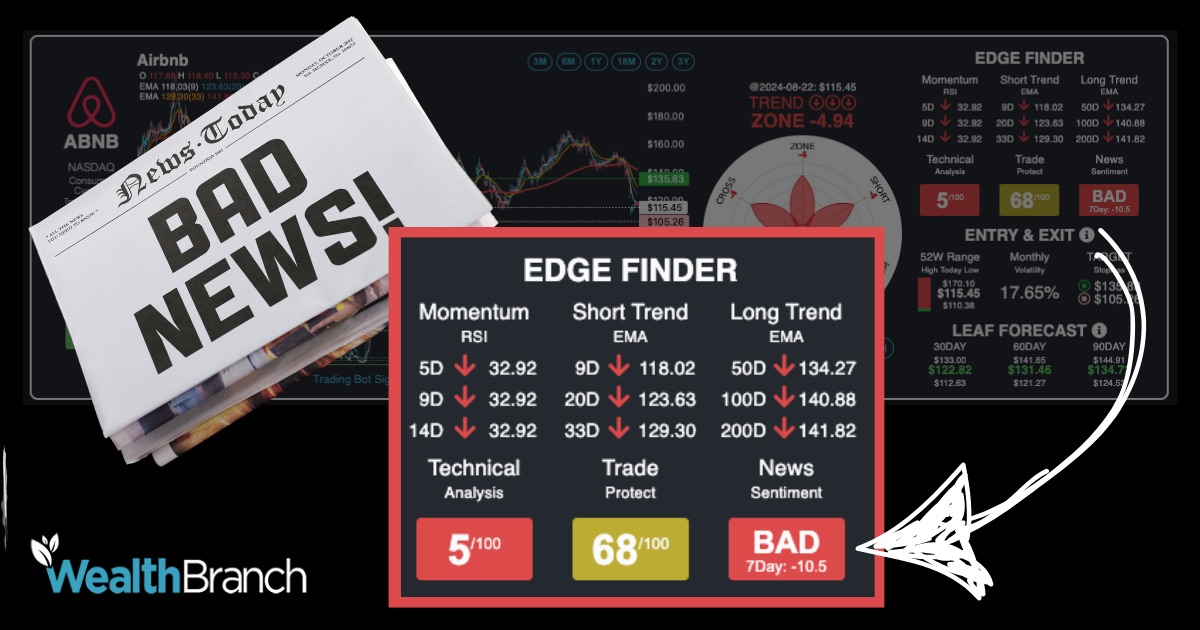
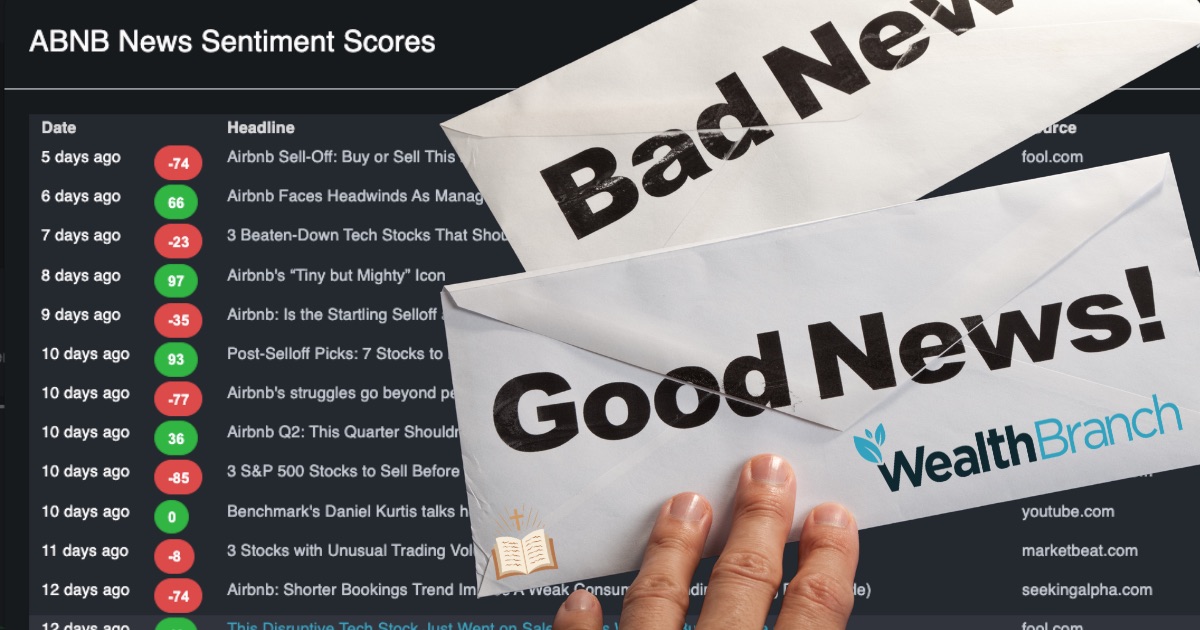
Use the WealthBranch News Sentiment Score to evaluate the impact of news on specific assets. While general news affects macroeconomic factors, individual assets may face challenges like scandals or lawsuits. Our tool gathers all relevant information in one place, helping you determine if news is significant or just a temporary headline affecting prices.
Protecting Against News Events
Given the potential for sudden market shifts, traders can employ several strategies to mitigate risk:
Stop-Loss Orders: Setting stop-loss orders can help protect against significant losses by automatically selling a position if it drops to a predetermined price. This is particularly useful during periods of high volatility when prices can change rapidly.
- Learn more about WealthBranch automated stop loss calculator.
Hedging: Traders can hedge their positions using options, futures, or other financial instruments. This strategy allows them to offset potential losses from adverse price movements, particularly when market conditions are uncertain.
Diversification: By spreading investments across various asset classes and regions, traders can reduce their exposure to news events that might negatively impact a specific sector or market.
Risk Management: It’s crucial for traders to establish clear risk management guidelines, such as limiting the amount of capital exposed to any single trade or market. This helps to avoid catastrophic losses during unexpected events.
Smart Strategies for News-Driven Markets
Smart investors can make money no matter what’s going on in the world. News can be a crucial part of your trading strategy, but it’s essential to approach it wisely:
Plan Ahead for Known Events: Much of the news that affects the markets is planned, like company earnings reports and economic updates. By anticipating these events and planning your moves in advance, you can avoid the pitfalls of reacting impulsively without a strategy.
Event-Driven Trading: This approach involves trading based on specific news events, such as earnings reports, mergers, or geopolitical developments. Traders analyze how these events could impact market prices and position themselves accordingly.
Sentiment Analysis: By gauging market sentiment through news, social media, and trading volumes, traders can identify potential market reversals or continuations. This strategy relies on understanding how news might influence investor behavior.
Staying True to Your Strategy
However, it’s also important not to simply follow the crowd. While news can drive market movements, it’s vital to stick to your investment convictions. If you believe in your investment choices, stay with them, even when market sentiment suggests otherwise. This disciplined approach can help you avoid unnecessary losses and capitalize on long-term gains.
In the end, while it’s impossible to predict every market move, traders who stay informed, employ protective strategies, and adapt to changing conditions are better positioned to navigate the complexities of trading in a news-driven market. By planning ahead and staying true to their strategies, smart investors can find opportunities no matter what’s happening in the world.