


![How to Determine Your Risk Reward:Ratio [ Stop Loss Calculator ]](https://wbprd-cdn.nyc3.digitaloceanspaces.com/wbprd-cdn/images/article-thumbs/Nr3tP8.jpg?v=1775608007)
How to Determine Your Risk Reward:Ratio [ Stop Loss Calculator ]


We invented calculators a long time ago so let's use them.
Traders love poker.
Poker is probability.
Figure out how often you win.
Then pick a proper ratio so you don't go bust at the table.
If you can’t spot the sucker in your first half hour at the table, then you are the sucker. - Matt Damon (Rounders)
Understanding Risk and Reward Ratios
You’ll only know the right risk/reward ratio to set once you’ve tested your strategy and understood your skill at picking winners. After reviewing your trades and performance, you can fine-tune your ratio based on real outcomes. Managing your risks effectively comes from experience, helping you boost profits and make informed decisions along the way.
So let's jump into some example shall we?
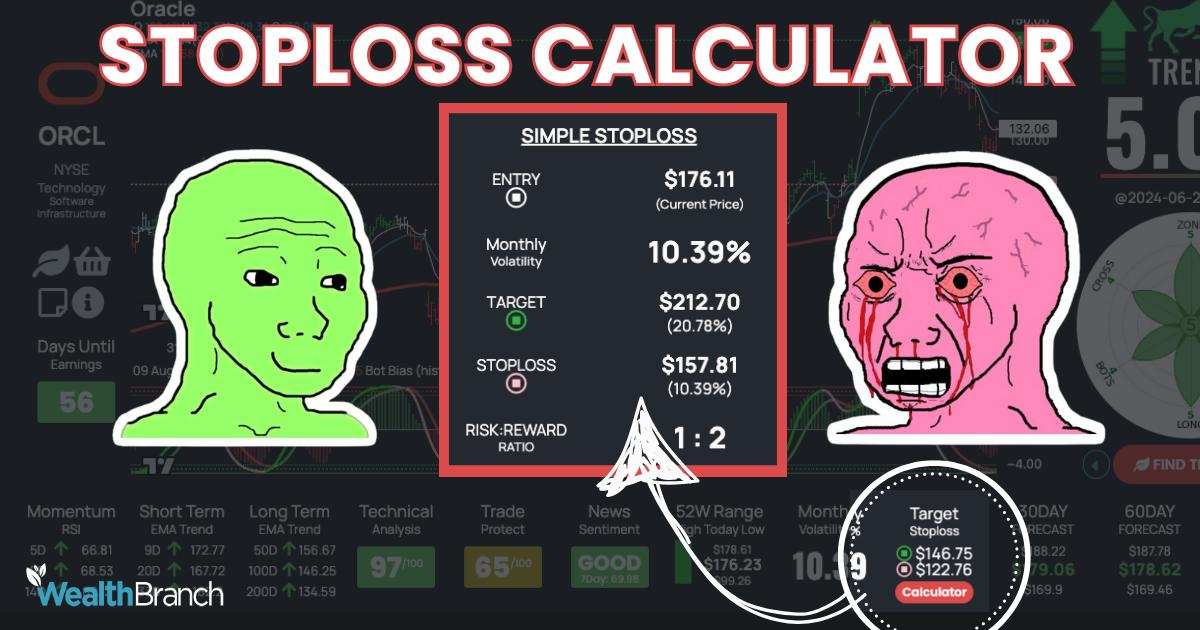
What is a Risk/Reward Ratio?
A risk/reward ratio compares the risk you're willing to take to the potential reward you can earn on a trade. It’s a simple yet powerful tool to decide if a trade is worth the risk.
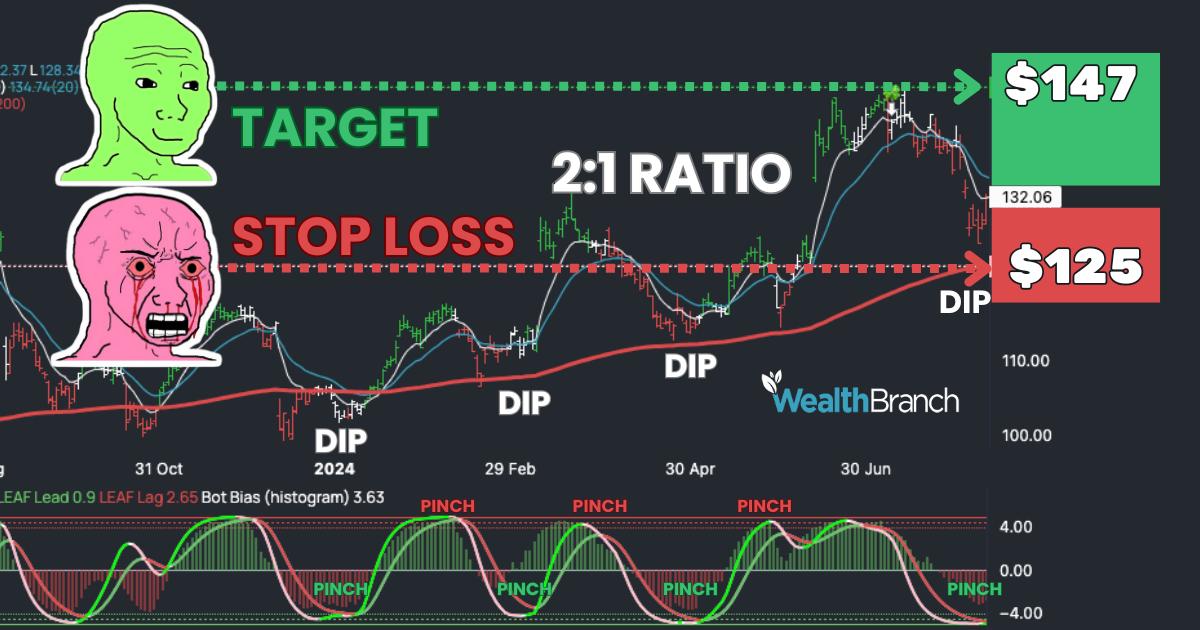
Example of a 1:2 Risk/Reward Ratio
In a 1:2 risk/reward ratio, you risk $1 for every $2 of potential gain. For example, if you’re risking $100, you expect to make $200 if the trade is successful. This ratio is popular because it allows you to be profitable even with a lower win rate. If you win 40-45% of your trades, you can still make money over time.
Example of a 1:5 Risk/Reward Ratio
A 1:5 risk/reward ratio means for every $1 you risk, you expect to gain $5. This high ratio is used in strategies aiming for large profits while keeping potential losses small. For instance, if you risk $100, your target profit is $500. Even with a low win rate, this ratio can lead to big gains when done right.
How to Use Risk/Reward Ratios Effectively
High-Probability Trade Setup
When you find a strong trend or pattern suggesting a big move, a 1:5 ratio can be very effective. For example, spotting a breakout pattern in a stock that usually leads to large price increases is an excellent time to use this ratio. You might set your stop-loss $100 below your entry price and aim for a $500 gain above your entry point.
Low Win Rate, High Reward Strategy
If your strategy wins only 20% of the time but generates large profits, a 1:5 ratio can still be profitable. For example, in 10 trades, you might lose $100 on 8 but make $500 on 2. Your total profit is $1,000 (2 x $500), and your total loss is $800 (8 x $100), leaving you with a net profit of $200.
Challenges of Using High Risk/Reward Ratios
CHALLENGE #1: Precision
Achieving a 1:5 ratio requires precise entry and exit points. If your stop-loss is too wide or your profit target too ambitious, the trade may not work as planned.
CHALLENGE #2: Patience
Waiting for trades that fit a 1:5 ratio can require patience, as these setups might not happen often. It’s important to stay disciplined and only take trades that meet your criteria.
CHALLENGE #3: Lower Win Rate
Trades with a 1:5 ratio often have a lower probability of success, so manage your expectations and stay committed to your strategy even if you experience losses.
Benefits of High Risk/Reward Ratios
BENEFIT #1: High Profit Potential
With a 1:5 ratio, even a few winning trades can significantly boost your overall profitability. This makes it an appealing strategy for maximizing gains.
BENEFIT #2: Risk Control
By risking a small amount relative to the potential reward, you limit your downside while aiming for substantial gains. This approach can protect your capital and keep you in the game longer.
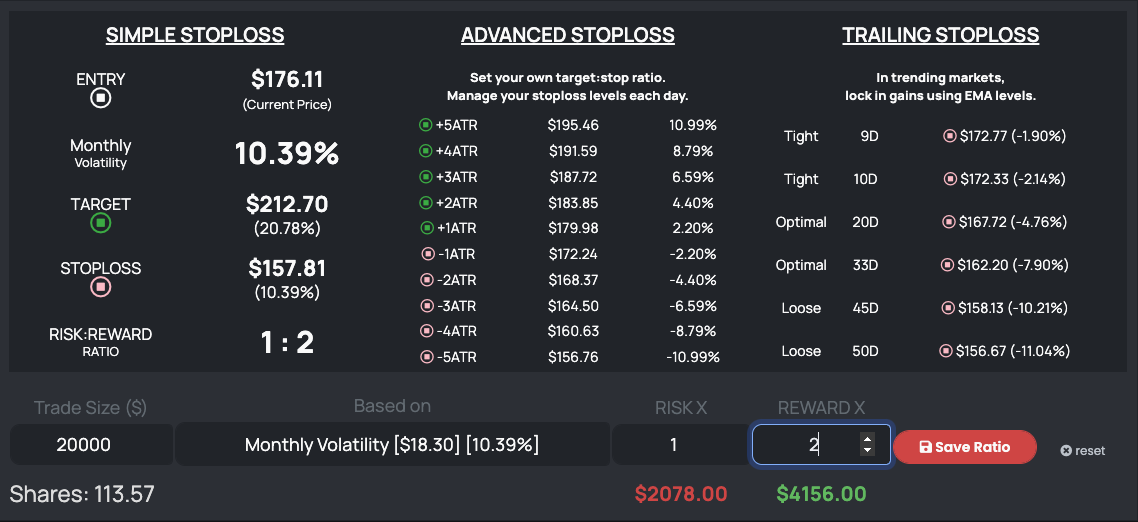
Example Trade Setup
Let’s look at an example trade using a 1:5 risk/reward ratio:
- Entry Price: $100
- Stop-Loss: $98 (risking $2)
- Take-Profit: $110 (rewarding $10)
- Ratio: $2 risk for $10 reward = 1:5 risk/reward ratio
Here, you risk $2 per share with the potential to gain $10 per share. If the trade works out, you gain five times what you were willing to lose.
Key Considerations for Using Risk/Reward Ratios
Break even win rates required ...
- 1:1 Ratio (Risk $1 to gain $1): Win rate needed: 50%
- 2:1 Ratio (Risk $1 to gain $2): Win rate needed: 33.3%
- 3:1 Ratio (Risk $1 to gain $3): Win rate needed: 25%
- 4:1 Ratio (Risk $1 to gain $4): Win rate needed: 20%
- 5:1 Ratio (Risk $1 to gain $5): Win rate needed: 16.7%
KEY #1: Win Rate vs. Risk/Reward Ratio
The lower your win rate, the higher your risk/reward ratio needs to be to stay profitable. Conversely, if you have a high win rate, you can use a lower risk/reward ratio.
KEY #2: Market Conditions
Adjust your risk/reward ratio based on market conditions. In volatile markets, aim for higher rewards, while in stable markets, lower ratios might be more appropriate.
KEY #3: Position Sizing
Combine your risk/reward ratio with proper position sizing to control your total exposure and stay within your risk tolerance. This ensures you don’t risk more than you can afford to lose on any single trade.
Conclusion
Mastering risk/reward ratios is essential for trading success. By learning how to calculate and use these ratios effectively, you can manage risk, maximize profits, and make smarter trading decisions. Whether using a 1:2 or a 1:5 ratio, the key is to stay disciplined, patient, and focused on your long-term goals. Start applying these strategies today and see your trading performance improve!